
Netflix’s Alien Worlds combines fiction and science, exploring life on exo-planets using known physics. While visually striking and speculative, its final episode lapses into clichéd storytelling.
Netflix’s Alien Worlds series is a blend of fiction and fact. The sub-genre of “hard” sci-fi approaches the boundary of non-fiction by putting science fact front and center; the narrative and characters are bound by known laws of physics, making classic tropes, such as faster-than-light travel, impossible. As narrator Sophie Okonedo declares, the four-part Alien Worlds applies the known laws of life to the possibility of life on exo-planets, those rocky bodies about the size of Earth circling other suns. The result is a visual and scientific feast that only sputters with the question of intelligent life.
Alien Worlds is like Mars
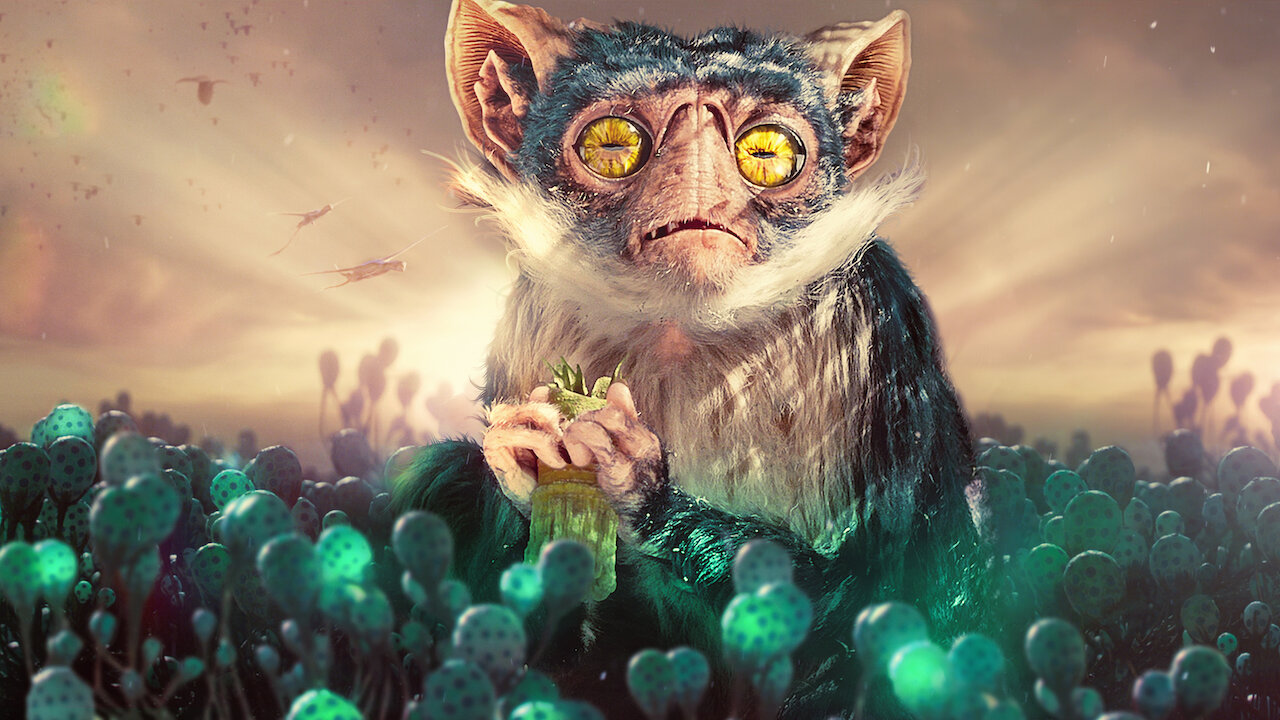
Alien Worlds calls to mind another Netflix series, Mars, a docudrama about the first colonists on the red planet. Scripted actors share the screen with scientists and real astronauts discussing the difficulties of establishing a human foothold. I found the approach forced and plodding at times, but Alien Worlds skips the human drama for pure speculation about the forms of life on planets dozens of light years away. Using CGI, Alien Worlds present creatures semi-familiar on the one hand and completely crazy on the other.
One creature is a flying herbivore hunted by spider-like bugs that drift like a balloon. Another creature resembling an aluminum bucket with a dozen legs skitters across a desert landscape. A third world populated by animals resembling rabbits and monkeys is dominated by fungi instead of green plants. Though the CGI sequences are sometimes repetitive, they never fail to capture attention.
Not a perfect series
The series falters in its final episode, which imagines a highly advanced civilization facing imminent destruction by the death of its sun. The producers gave in to an old pulp fiction idea: disembodied brains living in jars attended by robots. The civilization is apparently millions, if not billions of years old, but the culture’s ambition to escape is modest; just move to another planet in the same system. Perhaps a civilization as old and technologically savvy would’ve solved the FTL problem by now?
Speculation can be a game, and sometimes in science fiction, the game gets silly. Not with Alien Worlds, which keeps the science believable and fun.
Check out my other reviews and my thoughts about another Netflix series, the Lost in Space reboot. What did you think of Alien Worlds’ aliens?
One response to “Netflix’s “Alien Worlds” takes you to planets no one has visited, and likely never will”
[…] Here’s another review of a Netflix show, Alien Worlds. […]