
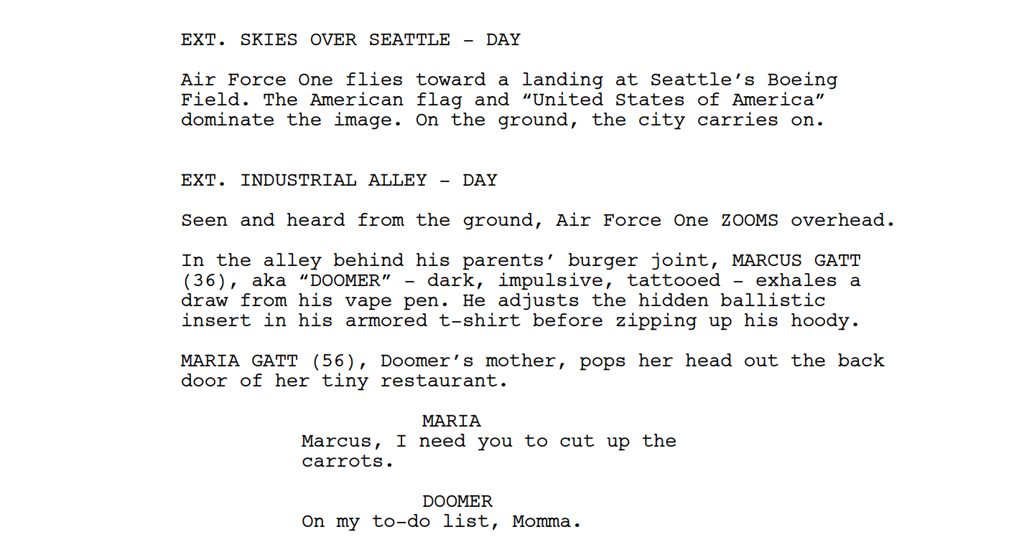
I explore the intricacies of narrative structure in screenwriting, from the classical three-act approach to the practical and dynamic eight-sequence structure, offering screenwriters what I’ve learned about organizing compelling narratives.
Writers of all stripes love to debate structure, that is, how to organize ideas and knowledge into a coherent narrative. Humans organize the world into a web of stories to generate a sense of control over an often chaotic environment. A disorganized story leaves the reader/listener/viewer anxious and exhausted. A good, well-organized story takes you on a cognitive and emotional journey from one point to another. At the end of the best stories, you understand the world a little better.
Screenwriters face special structural problems imposed by film, television, and digital streaming as media. In addition, commercial considerations impose limits and demands, especially for Hollywood-style productions. Most screenwriters hoping for attention from Hollywood recognize that studios and independent producers want to make a profit, or at least recoup their investments. Hollywood and its cousins expect screenplays to follow certain proven structural conventions.
Arguing over screenplay structure
Get two screenwriters together over a beer and they start arguing over the best approach to telling a visual story. The discussion usually revolves around the three-act structure or the sequence structure. The three-act structure, with its setup (introduction), confrontation (rising action), and resolution (crisis and denouement), goes back to the Greek plays. Academics and professional screenwriters have grafted this approach onto movies. Frankly, I’ve never been able to make this work in a continuous linear narrative. Plays have breaks, scene changes, intermissions, and so on. Movies never have these, with some rare exceptions. While reading scripts and watching movies, I had tons of trouble identifying the end of Act II, for example.
The approach I found useful almost immediately came out of the technological evolution of film. The first motion pictures shown to mass audiences ran a single reel of film, around 12 to 15 minutes. Writers and directors had to tell a coherent story within a single reel. As projection technology improved, writers could tell longer stories, divided into a number of reels. But they kept the notion of telling a story within one reel, though it flowed into another story told in the following reel, and so on. All the reels had the same characters, common settings, and similar themes. Eventually, eight or more reels ran anywhere from 90 minutes to two hours, about the tolerance of a human body for staying in a padded chair for a long stretch.
A favorite from the history of film
The casual viewer usually doesn’t notice the transition from one reel to the next (especially in streaming), but I learned to spot these, most of the time. When outlining a script, I found it relatively intuitive to divide a long narrative into a series of sequences, each containing a number of scenes. Ideally, each reel has its own beginning, middle, and end, with the following reel taking the emotion a notch higher. The final reel contains the climax and brings the viewer down to the end.
The technique is usually called the “eight-sequence structure” or outline. Variations play with the number of sequences, and graft on three-act terminology. I found this approach comparatively easy for several reasons. I’d been exposed to it already in a cinematography class in college. I’d written short stories, which are a kind of one-reeler in literature, and I’d written novels, which (at least over the last 100 years or so) are typically strings of sequences and scenes. In contrast, I’d only written one or two short plays, and I don’t attend much theater, so I was less familiar with three-act thinking.
If you’d like to follow my story, please subscribe to my blog. If you have thoughts, comment below.
One response to “Three acts to eight sequences: Decoding screenplay structure”
[…] the future, I’ll share more details of the screenplay process, particularly the adventure of attempting to sell a screenplay in a cutthroat world I know next to […]