
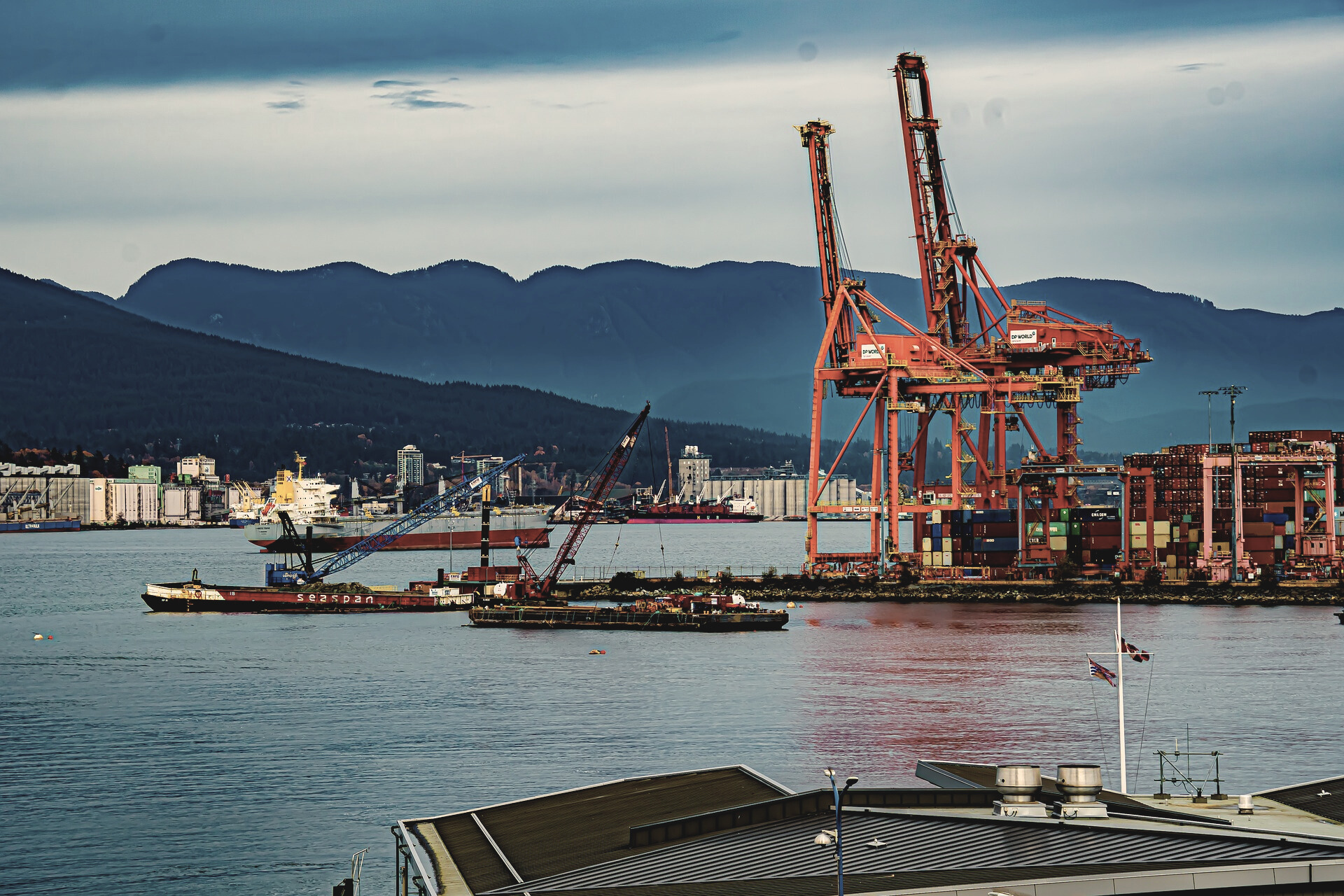
Labor history tends to get short shrift in Hollywood, but as a lifelong resident of Seattle, I wanted to dive into that history, which shaped the city. That led to my new screenplay, The Brothers O’Neill, which also explores LBGTQ+ themes.
In 1934, a waterfront strike hit the entire west coast, including the docks in Los Angeles, the Bay Area, Portland, Tacoma, and my home town of Seattle. The strike marked a turning point in the American labor movement; the newly elected president, Franklin Roosevelt, personally intervened to end the strike.
One day I saw a newspaper photo which I have never forgotten: Two Seattle police officers hold submachine guns, anxiously waiting for strikers to rush them. The photo encapsulated the tension and danger of the time, which in some ways isn’t so different from the 2020s. I also wanted to tell the story of that moment, given its grand drama and long-term impact on the relationship between labor and capital in America. The results were the first script in my portfolio, The Brothers O’Neill.
Avoiding labor union stories
For the most part, Hollywood has avoided telling stories of labor activism, with a few exceptions, notably Black Fury (1935), On the Waterfront (1954), and Norma Rae (1979). These pictures tend to celebrate the triumph of workers over capital, a touchy subject in an industry with a long history of labor strife.
For an unproduced screenwriter such as myself, this might seem like wading into dangerous waters. However, I find the stories of dockworkers and merchant sailors struggling for rights we take for granted enormously compelling. These rights were paid for in blood.
But instead of telling the story from the perspective of workers, I decided to tell it from the perspective of a cop tasked with upholding the law and keeping the peace. In 1934, a strike was anything but lawful and peaceable.
Synopis of ‘The Brothers O’Neill’
The Brothers O’Neill is the story of a young Seattle police officer, Sam O’Neill, whose beat covers the piers and wharves teeming with labor tension. Here’s the first portion of the synopsis.
In 1934, Corporal Samson “Sam” O’Neill (35) is ordered by Police Lieutenant Jack Fleming (38) to investigate a body floating by a pier. Sam and his partner, Patrolman George Deschamps (29), head to the waterfront and find the corpse of Kelly Jensen (46), one of Sam’s informants. Sam asks to help with the inquiry, but Fleming says no; He’s not yet a detective.
The previous day, an ambulance races toward the pier. Four longshoremen carry a comrade on a litter toward the shore. The ambulance arrives at the Ashcroft and Company dock, but the injured man has died. His compatriots grieve. Nearby, Sam and George shake down a Gang Boss for payoff money, just as the Boss picks men for a work crew. In the crowd is Randy O’Neill (27), a union organizer. His close friend and secret lover Russell Faber (26) stands by. Randy berates the Gang Boss for picking men unfairly. He tells the others they can change their conditions. The Gang Boss threatens Randy, but Sam steps in to prevent a fight. Sam and Randy are brothers, but Sam is unaware of Randy’s homosexuality.
Sam sees his informant Kelly loitering nearby. He asks Kelly about the workers’ mood. Kelly says a major strike is planned. Back at police headquarters, Sam stuffs the payoff money into Fleming’s desk. He runs into Chief Jerome Howard (51), who asks Sam about waterfront conditions. Meanwhile, at a local union hall, Randy prepares marchers for a demonstration.
In a downtown high-rise, Alden P. Ashcroft (61), owner of Ashcroft and Company, meets with Chief Howard and Mayor Charles Smith (58). Ashcroft admonishes Howard to keep the peace. They don’t want a repeat of 1916, when five longshoremen and two policemen died. Howard flashes back to the incident and how he saved a young Kelly Jensen’s life. Outside Ashcroft’s office, Randy’s demonstrators, waving placards and singing songs, are attacked by mounted police officers.
If you’d like to read the whole synopsis, or the script, visit my profile on Stage 32, an online community of motion picture creatives. Let me know what you think in the comments below.
If you’re a producer, agent, literary manager, or actor interested in more information, you can reach me directly via my contact form.
Image: Pixabay
One response to “Turning Point on the Docks: ‘The Brothers O’Neill’”
[…] The Brothers O’Neill – As the Seattle waterfront seethes with revolution, a beat cop struggles to understand his brother’s underground life, while identifying the powerful man behind the murder of his snitch. […]